Food · 5 min read
Kyrgyz Food: 20 Dishes to Try in Kyrgyzstan and Where to Eat Them
Updated: · Kyrgyzstan Outdoor
Kyrgyz cuisine is a nomadic cuisine built on meat, dough and dairy. Must-try dishes include the national dish beshbarmak, Osh plov, lagman noodles, steamed manty, tandoor samsa, kuurdak and kymyz (fermented mare's milk). Karakol's cold noodle soup ashlan-fu and fresh kaymak cream with boorsok in Son-Kul yurts are unique local experiences. Most meat served is halal.
Before you sit down at a Kyrgyz table
The first thing you'll notice at a Kyrgyz meal is that the table never empties. The tea bowl is refilled before you finish it, the bread plate is topped up and your host will keep saying "a little more". Kyrgyz cuisine grew out of nomadic life, from long winter nights, days on the summer pastures and big gatherings of guests. It's hearty, rich and built around meat. Along the Silk Road it also absorbed a great deal from Uyghur, Dungan, Uzbek and Russian kitchens.
Most Kyrgyz are Muslim and most meat served in restaurants is halal. Alcohol is widely available. If you have dietary requirements, just ask; nobody will mind.
Beshbarmak: the national dish
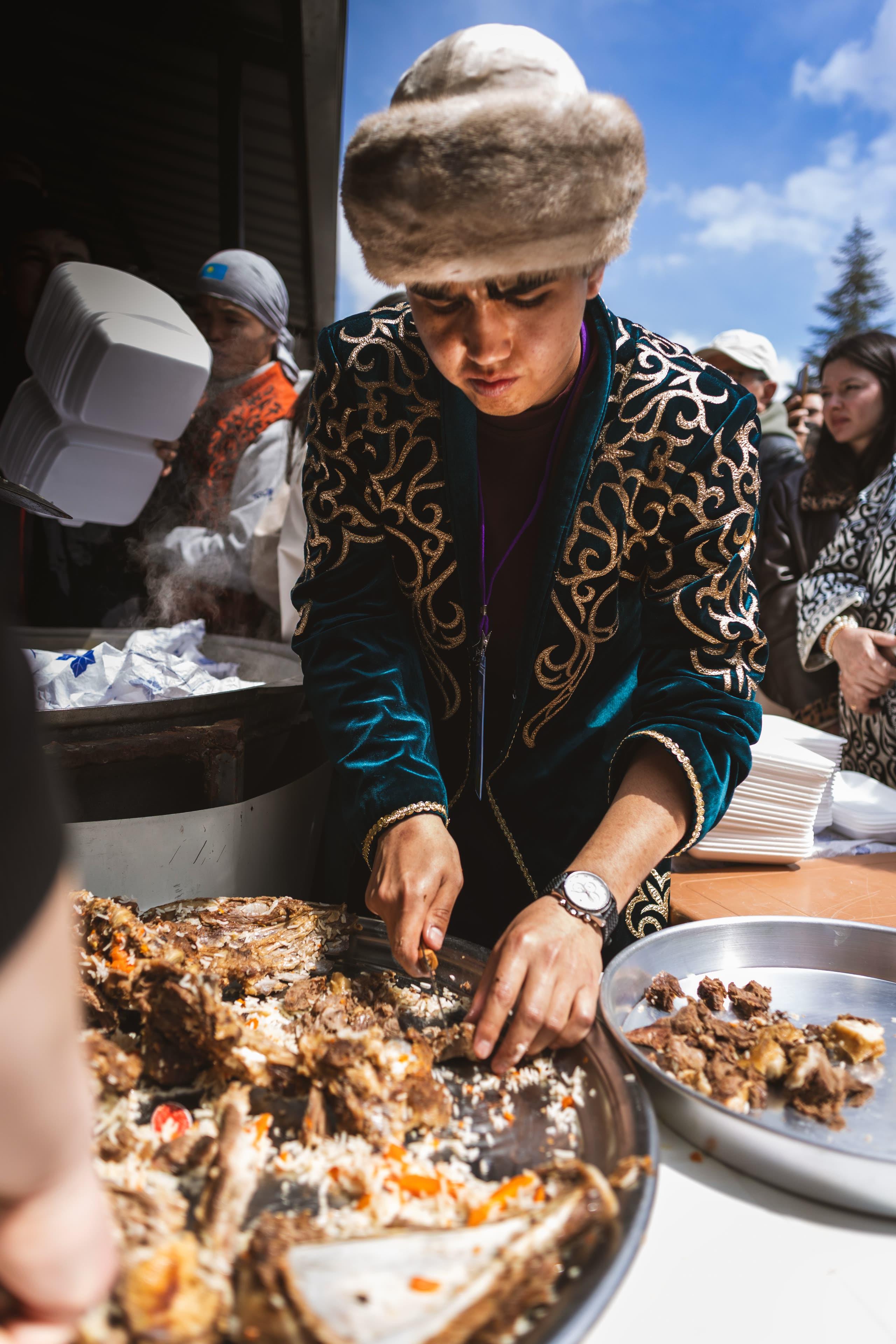
If you only try one dish in Kyrgyzstan, make it beshbarmak. Boiled mutton or horse meat is laid over thin, hand-cut squares of noodle dough and finished with an onion broth. The name means "five fingers", because it's traditionally eaten by hand, with the broth drunk separately from a bowl.
Beshbarmak isn't an everyday lunch. It's the dish for weddings, holidays and honoured guests, so if you're invited into a home there's a good chance it will appear. Even who gets which cut of meat follows tradition: the most prized pieces go to elders and guests.
Plov and lagman: the Silk Road on a plate
Plov is rice cooked with lamb and yellow carrots in a huge cast-iron cauldron. It's shared with Uzbek cuisine, and the best is found in the south, in Osh. The rice at the bottom of the cauldron, soaked in the fat of the meat, is considered the best part.
Lagman is a dish of hand-pulled noodles with a thick meat and vegetable sauce, from Uyghur and Dungan cooking. Watching a cook slap and stretch the dough into noodles is half the fun. Besides the saucy version there's fried *kuurulgan lagman*; add chilli oil from the table if you like heat.
Manty, samsa and other doughy delights
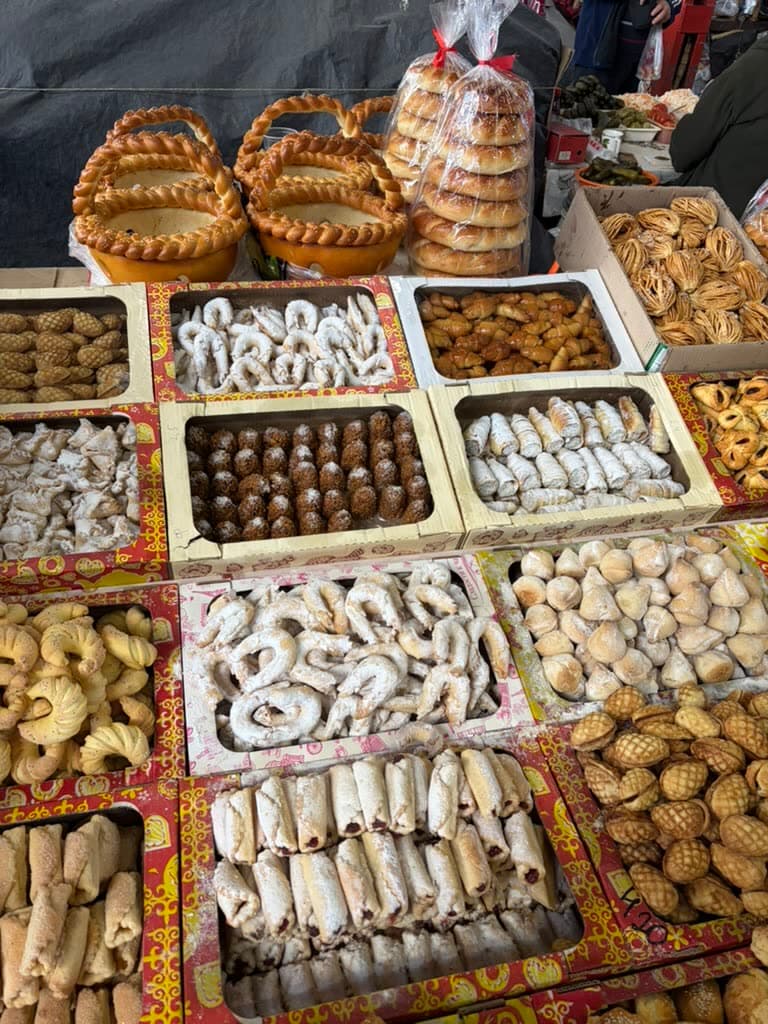
Kyrgyz manty are large steamed dumplings filled with minced meat and plenty of onion, sometimes with pumpkin. They're served with sour cream or chilli sauce.
Samsa are pastries baked on the inside wall of a tandoor and filled with lamb and onion. Buying one hot from the oven at a bazaar is one of the simplest pleasures in Bishkek.
Boorsok are small pieces of fried dough that appear on every table, especially in yurts, served with tea. Spread with fresh kaymak cream and jam, they're hard to stop eating.
And then there's bread, nan. Bread is treated with real respect. Never put it upside down, drop it or place anything on top of it. At the table, bread is broken by hand and shared.
Food of the pastures: kuurdak, shorpo and chuchuk
On high pastures like Son-Kul the menu gets simpler but fresher. Kuurdak is fried meat with onions and potatoes, traditionally cooked on the day an animal is slaughtered. Shorpo is a plain meat soup, and few things feel better after a long day in the saddle.
Chuchuk is a traditional horse-meat sausage served at weddings and holidays. Horse meat can feel unusual to visitors; you don't have to try it, but a slice is a small window into local culture.
Ashlan-fu: Karakol's cold soup
You can't leave Karakol without trying ashlan-fu, a cold soup of starch jelly and noodles in a sour, spicy broth. It's a Dungan dish and has become almost a symbol of the town. The first spoonful may feel strange; by the second you're used to it, and by the time you leave you'll want another bowl. Small canteens around the town bazaar serve nothing else.
Kymyz and other drinks
Kymyz is fermented mare's milk, drunk fresh on the pastures in summer. It's slightly sour, fizzy and very mildly alcoholic. For many Kyrgyz it's a health tonic; some city dwellers head to the mountains in summer just to drink it. It can be heavy on the stomach, so start with a small bowl. If a host offers it, tasting at least a little is polite.
In summer you'll see big street barrels selling maksym and chalap in Bishkek. Maksym is a slightly sour drink made from grain; chalap is salty and yoghurty. Both are refreshing on a hot afternoon.
And tea. Kyrgyz hospitality revolves around it. You'll notice your bowl is only ever filled halfway. That isn't stinginess: it means your host wants to keep serving you.
Where to eat what
In Bishkek, start at Osh Bazaar for samsa, kurut, dried fruit, honey, spices and fresh tandoor bread. The city centre has plenty of restaurants serving Kyrgyz food, some inside yurts, but the best lagman and manty are often in unpretentious Uyghur and Dungan canteens. The coffee scene has grown fast too.
Around Karakol and Issyk-Kul, try smoked lake fish from roadside stalls. In Karakol, a home-cooked dinner with a Dungan family can be arranged, and it's something no guidebook can give you.
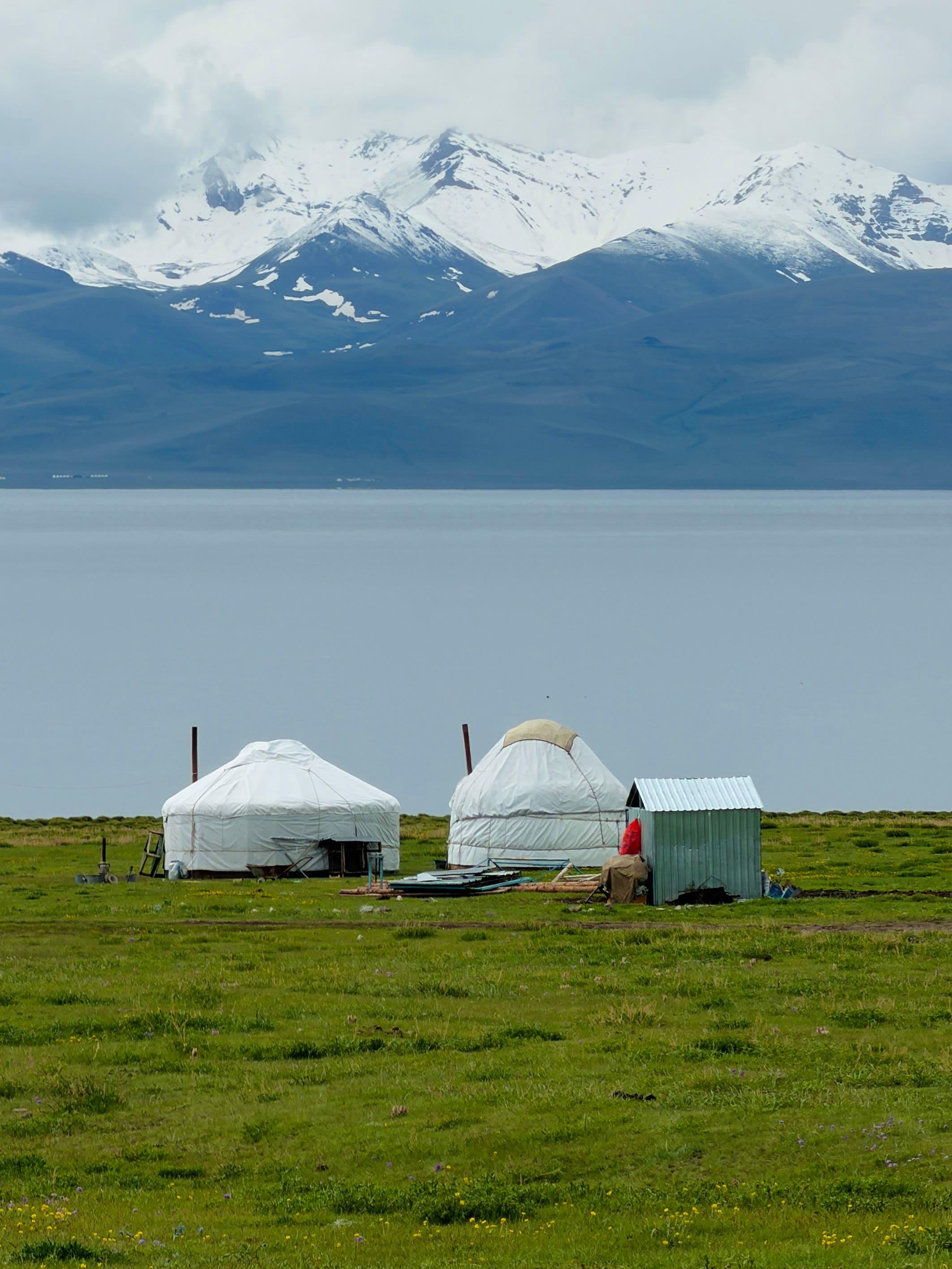
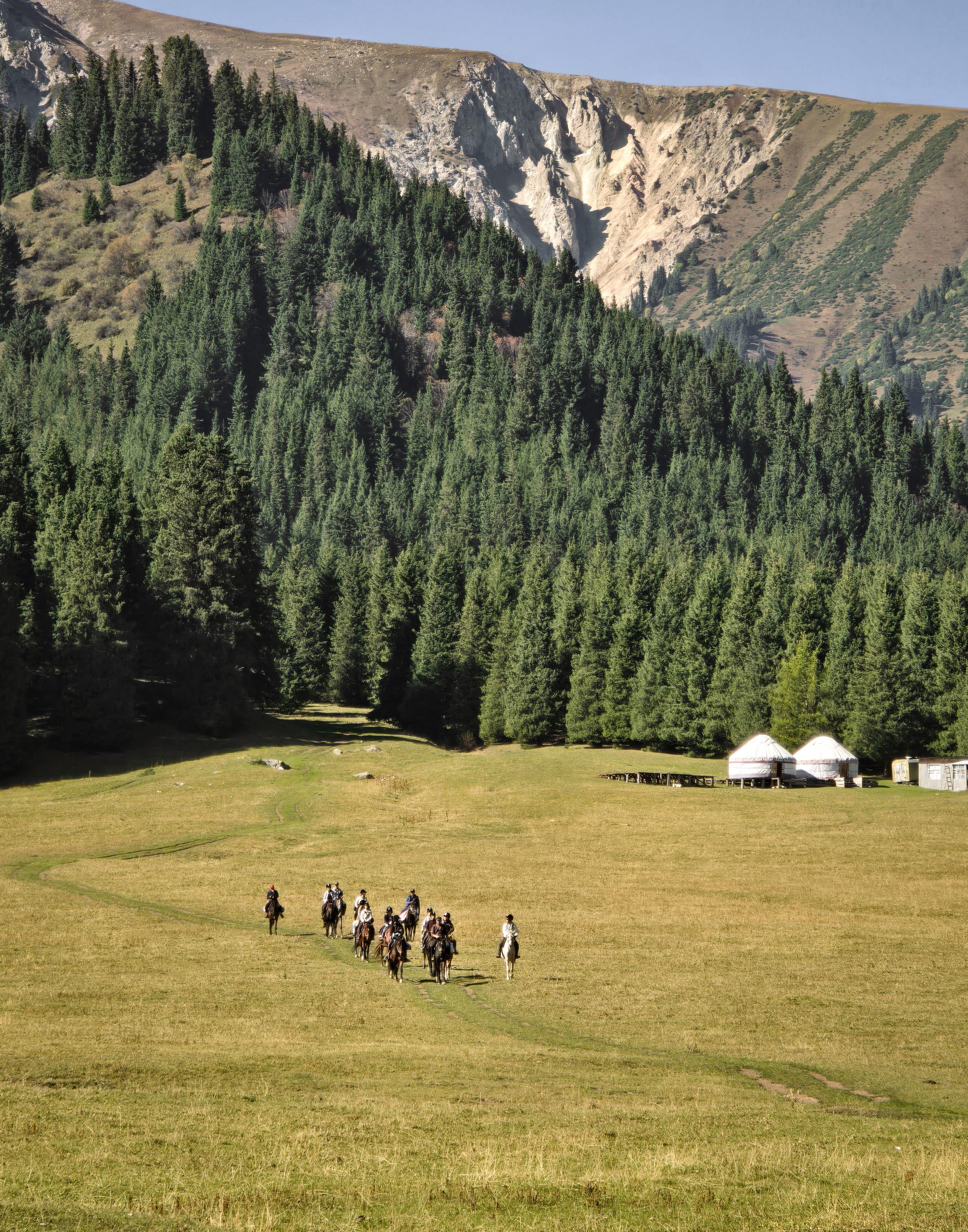
On Son-Kul and the high pastures, the menu depends on what the camp has, but everything is fresh: kaymak, butter, boorsok, shorpo, beshbarmak and, all summer long, kymyz. On horse treks it's common to be invited into a shepherd's yurt for tea.
In Osh, try plov from the giant cauldrons at Jayma Bazaar, one of the oldest markets in Central Asia.
If you're vegetarian
To be honest, Kyrgyz cuisine isn't easy for vegetarians. Bishkek has options, but in villages and on the pastures meat is in almost everything. On our tours, tell us in advance and we'll talk to the camps. Turn up unannounced, and a yurt camp's idea of "meat-free" may be potatoes cooked in meat broth.
A few table customs
Shoes come off before you enter a yurt. The place of honour opposite the door, the tör, goes to elders and guests; if you're shown there, accept. After the meal there's a short blessing, hands are passed over the face and people say "omin". You can join in or simply wait quietly.
To learn more, read our guide to Kyrgyz culture and traditions. The easiest way to taste all of this is to stay in a yurt on our 3-day Son-Kul horse trek.
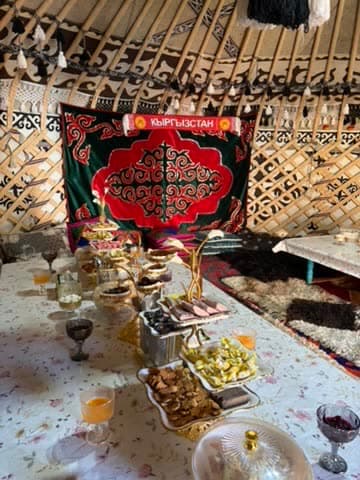 A dastorkon spread inside a yurt
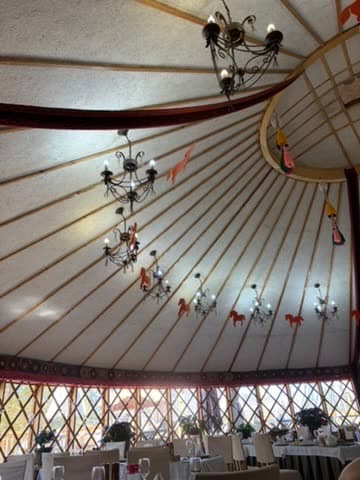 The roof of a yurt restaurant
Frequently asked questions
What is the national dish of Kyrgyzstan?
Beshbarmak: boiled mutton or horse meat served on thin hand-cut noodles with broth.
Is food in Kyrgyzstan halal?
Most Kyrgyz are Muslim, so most meat in restaurants is halal. Look for a 'halal' sign or ask if you want to be sure.
What is kymyz?
Kymyz is fermented mare's milk, slightly sour, fizzy and very mildly alcoholic, drunk fresh on the summer pastures.
Is Kyrgyzstan good for vegetarians?
Bishkek has good vegetarian options. In rural areas and yurt camps, request vegetarian meals in advance.